
As a leader or manager in social or health care you will have goals that require you to change something: to progress an idea, to improve an aspect of performance, perhaps resolve certain staff conflicts, even implement a whole new service. Because you want to succeed, any new change you have responsibility to lead is likely to fill you with a mixture of feelings and ambiguities. So how do you set about planning ahead to maximise the chances of a successful outcome?
Over 30 years as a management consultant has shown me that many organisations approach the complex challenges of what the King’s Fund call the ‘wicked problems’ surrounding social exclusion by attempting to control the situations in which they find themselves. A manager is prone to forget that while they might have line management responsibility for a group of staff, they do not control the emotions and beliefs these people bring to the workplace; nor that many of the people required to achieve the change goals are managed by other departments, or work in other organisations with different operating cultures.
The net result is often that the desired change does not happen and problems and difficulties seem to compound themselves, perhaps even getting worse. So why is this? How do we approach working with the chaos inherent in social problems to give ourselves a much greater chance of sustained success? The biggest lesson we have to learn is to work with all the uncertainty, turbulence and unpredictability that we find all around us, rather than airbrush it out.
The philosophy behind this new Masterclass is set out in my book ‘The Empty Waiting Room’, published in 2023. It offers leaders and managers a different way of planning ahead, based on my 40 years of learning in developing and implementing projects that deal with complex social problems. It is designed to give you the confidence to manage the uncertainty, complexity and unpredictability you encounter, not avoid it, and so find creative and sustainable ‘solutions’.
The Masterclass – and the new book – provides an alternative conceptual framework, a new set of lenses, for looking at the world. A set of 7 principles are offered for thinking about service development, based on the science of complexity. The Masterclass will provide you with some new concepts, showing how these have been applied successfully in specific contexts, either by myself or others, then help you interpret these successes in the light of your own individual situation.
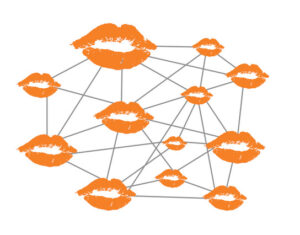
Managing relationships is at the heart of this new paradigm. The scientist Carlo Rovelli beautifully describes the world as being made up of a network of kisses, not stones: a rich and intimate network of relationships that must command our attention to create the world of the future, where we trust and empower people to define and deliver the right outcomes.
The Masterclass is a judicious mix of coaching, mentoring and teaching. It aims to give you the thinking time and framework to approach your challenges in a new way. It will not tell you what to do but help you think differently: your actions can grow out this ‘different thinking’. Some of the elements of the framework will feel obvious and natural, some of it will feel counter-intuitive.
What I can guarantee is that a complexity framework provides an intuitive, collaborative and disciplined way to engage with the unknowable.